Football season
Hayden's TimbreFootball season is more than a calendar backdrop in the story: in Texas, it organizes work, youth athletics, family schedules, and the heightened dangers surrounding Timbre Simons. Its recurring presence links the apparently ordinary life of The Bar and the Powell family to a broader season of physical strain, local custom, and protective responsibility.
Seasonal Setting and Local Rhythm
Football season makes The Bar unexpectedly quiet on Sundays. With only the bare minimum of customers, Timbre Simons questions why the business remains open when almost no one comes in. Ford Turner explains that the bar has been slow during football season and suggests serving snacks to attract the football crowd. Jenna rejects the proposal while collecting longnecks for two men playing pool in the back, preserving the contrast between the bar’s sparse trade and the season’s otherwise powerful hold on local life.
The exchange gives football season an economic dimension. It affects not only the people attending games but also the businesses that depend on weekend traffic. The Bar’s empty stretches create boredom and frustration, while the suggestion of football-oriented food reveals an attempt to adapt to the culture around it. Jenna’s refusal leaves that adaptation unresolved, making the season a pressure on the bar rather than a guaranteed source of customers.
Physical Demands on the Boys
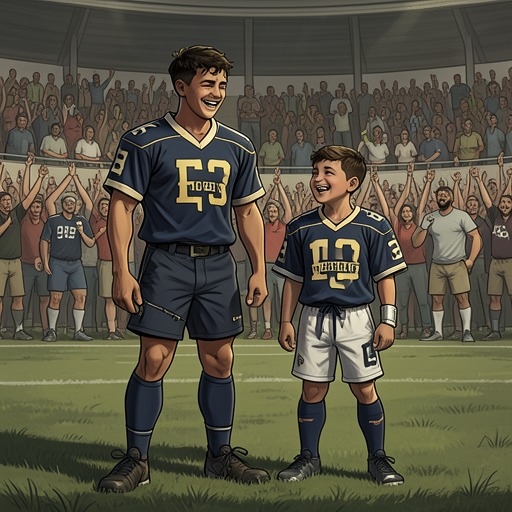
Football season is also defined by bodily exhaustion. After a day of training, Tucker Powell describes running, hitting, and falling until the work seemed endless; his face and the face of his companion carry a red glow from the exertion. Hayden Devillier frames that fatigue as the unavoidable cost of playing football in Texas during the fall, treating the pain as part of the sport’s seasonal discipline rather than an exceptional disruption.
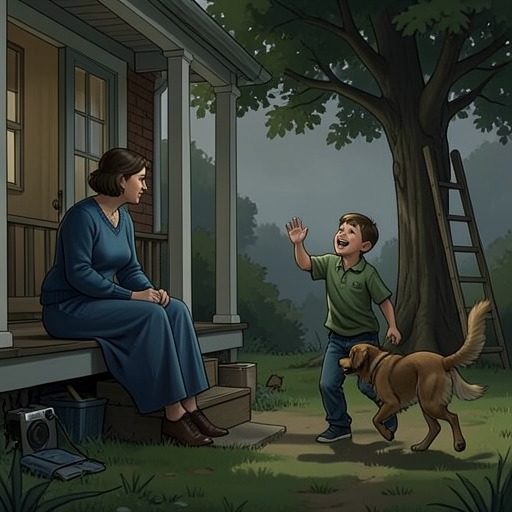
The aftermath immediately returns the boys to family life. Tucker Powell is starving and hopes Peri Powell has prepared something good, while Crew Devillier considers staying at Tucker’s for dinner. Football therefore does not isolate the boys from domestic routines; it feeds directly into hunger, parental expectations, and decisions about where the children will spend the evening. The season’s physical intensity is absorbed into the family network that cares for them.
Safety, Protection, and Control
Football season forms part of the background to Hayden Devillier’s increasingly urgent concern for Timbre Simons. When she travels alone by bus in the middle of the night, he angrily lists the dangers she might have faced, including being forced off the bus with a gun or knife without the driver noticing. Police officers eventually board the bus and cause the men harassing her to leave, but the rescue does not erase Hayden’s fear; it confirms how narrowly the danger has passed.
A similar conflict recurs when Timbre Simons takes a bus after walking to a stop on Mountain Grove. Hayden Devillier objects that the busy road carries heavy traffic and exposes her to strangers who might abduct her. His response is protective and affectionate, but it also reveals the tension between safeguarding someone and restricting her independence. Timbre’s need to save money and avoid remaining in the shelter forever makes public transportation economically necessary, while Hayden’s greater resources make its risks appear intolerable.
Seasonal Contrast with the Story’s Violence
The ordinary language of football season—Sunday business, snacks, training, hunger, and fall weather—stands in sharp contrast to the violence that later surrounds Timbre Simons. Ella Sullivan threatens her with a knife and presses the blade against her cheek, while Krissy Thompson insists that Timbre must be removed so she can reclaim her family. The threat escalates when Ella Sullivan proposes carving a mark into Crew Devillier’s forehead to prevent Timbre from returning or warning anyone.
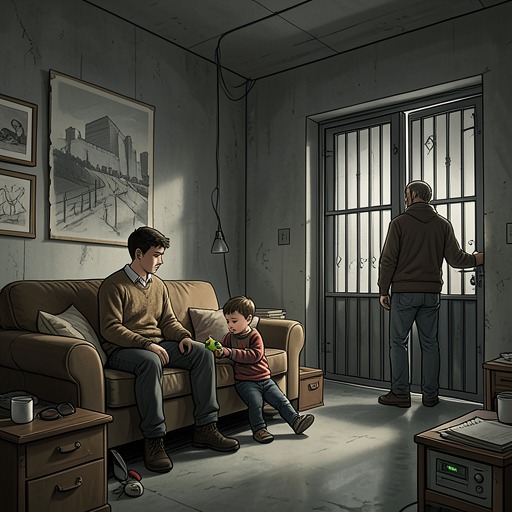
That threat exposes how the season’s protective family structure can be turned into a weapon against itself. Timbre pleads that Crew Devillier is an innocent child who did not choose to be born, but the kidnappers use his vulnerability to enforce silence. When Krissy Thompson and Ella Sullivan return to the Powell family home, Krissy Thompson refuses to let Crew Devillier leave her sight and Ella Sullivan draws a gun, claiming that the weapon gives them control. Football season’s language of toughness and endurance is thus shadowed by a far more dangerous coercion: bodily force, surveillance, and threats against a child.
Narrative Significance
Football season supplies a recurring measure of pressure in the novel. It makes The Bar slow, makes the boys tired, and makes Hayden Devillier’s concern for Timbre Simons more immediate. Against that recognizable seasonal rhythm, the story places homelessness, financial hardship, family conflict, and kidnapping, showing how quickly everyday obligations can become matters of safety and survival. The season’s ordinary demands help define the protective bonds among Hayden Devillier, Crew Devillier, and the Powell family, while the surrounding threats demonstrate what those bonds are ultimately forced to defend.